
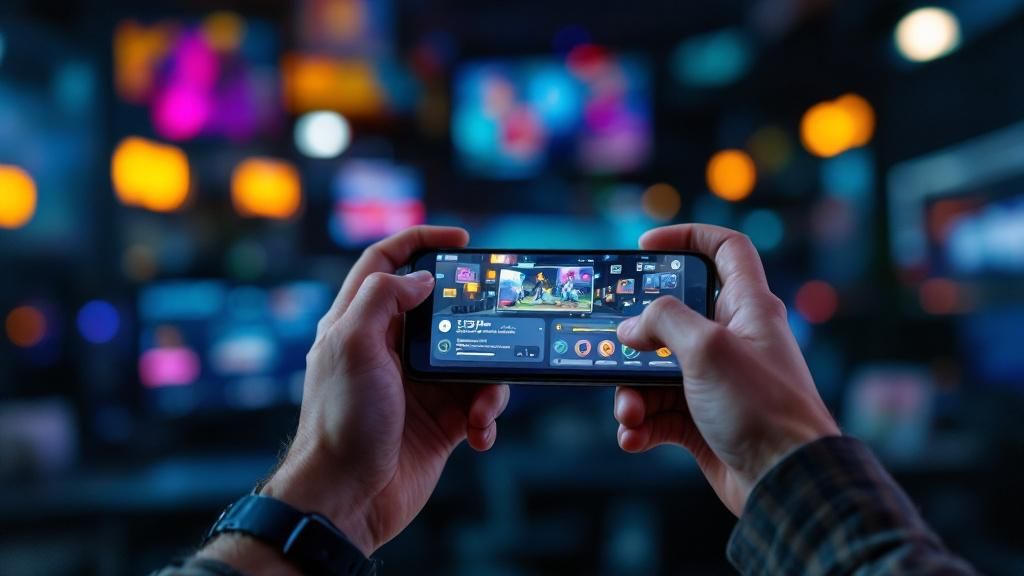
The gaming industry has experienced a significant transformation in recent years, with mobile games leading the charge towards inclusivity. Accessibility features—from configurable controls and subtitles to colour-blind options and haptic feedback—have revolutionised how millions of players with disabilities experience gaming. This article explores the vital accessibility options now integrated into popular mobile titles, analysing how developers are removing obstacles and ensuring that everyone, irrespective of their capabilities, can appreciate compelling gameplay and immersive worlds.
Accessibility Display Features
Visual accessibility is one of the most important areas of mobile game design, allowing players with visual impairments or colour blindness to participate fully with games. Developers now incorporate features such as adjustable text sizes, high-contrast settings, and adjustable colour palettes that address varying visual requirements. These features enable players to adjust UI elements and game text to accommodate their requirements, guaranteeing that essential information stays readable and distinct during gameplay.
Colourblind modes have grown increasingly sophisticated, offering diverse filter settings tailored to distinct categories of colour blindness, including protanopia, deuteranopia, and tritanopia. Additionally, numerous contemporary mobile titles provide screen reader support and auditory explanations for graphical components, transforming graphical information into accessible formats. These thorough visual accessibility solutions demonstrate the gaming industry’s pledge to inclusivity, allowing gamers with different visual capacities to move through menus, read dialogue, and enjoy narrative content without compromise or frustration.
Audio and Haptic Feedback Solutions
Audio availability remains a fundamental element of inclusive gaming design. Developers currently include extensive subtitle systems, sound visualisation tools, and mono audio settings to support deaf or hard of hearing gamers. Many titles feature adjustable auditory prompts that translate essential game data into visual alerts, ensuring players remain aware of important story elements or hazard alerts. This multi-sensory design enables all players to stay completely immersed with the play experience.
Haptic feedback technology has become a transformative inclusive design element, providing tactile responses that convey gameplay data through haptic vibrations. Players who are sight-limited derive substantial benefit from haptic signals that indicate approaching threats, completed tasks, or shifts in game environment. Modern smartphones generate sophisticated haptic feedback, permitting developers to build rich sensory experiences that transcend traditional visual communication methods and improve immersion for the entire player base.
The integration of audio and haptic solutions demonstrates developer dedication to building truly inclusive experiences. By layering diverse sensory input systems, mobile games now accommodate diverse accessibility needs whilst sustaining compelling gameplay. These advancements prove that accessibility improvements serve the whole player community, not just those with certain disabilities, rendering games more engaging and user-friendly for everyone.
Customisation of Controls and Input Methods
One of the most notable advancements in gaming on mobile devices accessibility is the option to adjust controls to suit personal needs. Rather than compelling users to adapt to fixed, uniform control schemes, contemporary mobile gaming offer extensive remapping options that allow users to remap buttons, alter sensitivity settings, and modify input thresholds. This flexibility proves invaluable for players with reduced dexterity, tremors, or those utilising alternative input devices. Developers understand that accessibility isn’t standardised solution; instead, they offer detailed control options permitting every player to customise their gaming experience precisely.
Beyond conventional tactile controls, mobile games increasingly support diverse input methods to cater to different physical abilities. Spoken instructions, gaze-detection systems, and purpose-built gaming controllers can now work smoothly with mobile titles, broadening access possibilities substantially. Button-activated inputs allow players with significant movement limitations to experience gaming through simple, deliberate inputs. Furthermore, adaptive controllers designed specifically for disabled gamers have become more compatible with mainstream mobile platforms. These innovations demonstrate developers’ commitment to removing technological barriers, ensuring that individual physical limitations need never stop people from experiencing the joy and engagement that mobile gaming offers.
Sector Influence and Upcoming Growth
The integration of accessibility features into mobile gaming has sparked significant industry-wide transformation, driving large studios and indie creators alike to focus on accessible gameplay. This transition has broadened the potential player base substantially, allowing millions of individuals with disabilities to participate in gaming communities previously closed to them. Therefore, inclusive design has evolved into not simply an moral obligation but a commercially viable approach, driving innovation and competitive advantage. As more titles implement these features, consumer expectations continue to evolve, cementing accessibility as a fundamental requirement rather than an optional extra to contemporary gaming.
Looking ahead, the prospects of mobile gaming accessibility appears exceptionally promising, with developing innovations offering unparalleled opportunities. Artificial intelligence and machine learning are facilitating enhanced bespoke settings, whilst progress in tactile technology promise more immersive tactile experiences for players with visual impairments. Developers are engaging actively with accessibility specialists and disability representatives during production, ensuring that accessible design becomes embedded in development pipelines from inception. This future-focused methodology suggests that tomorrow’s mobile games will offer increasingly extensive accessibility features, ultimately creating a gaming landscape where ability becomes fundamentally inconsequential to participation.
